







The driver ate the fries. The restaurant gets the one star.
Nearly three in ten delivery drivers admit to taking food from an order. The refund comes out of the platform, the rating stays on your storefront. Here is what a 2 by 6 inch tamper-evident seal does about it, and why 100 of them come free with every Supply Access subscription delivery.
Nearly three in ten delivery drivers admit to taking food out of an order they were carrying. That is not a rumour going around the industry. It comes from a US Foods survey of roughly 500 drivers working for DoorDash, Grubhub, Postmates and Uber Eats: 54% said the smell got to them on a run, and about half of those acted on it.
Here is the part that matters for a kitchen. The customer who opens that bag and finds half the fries gone does not blame the driver. They cannot see the driver. They see your name on the receipt, your logo on the bag, and a rating box waiting for one star. The platform refunds the order and moves on. The review stays on your storefront.
The 85% is from the same survey, and it is the number worth sitting with. Customers are not asking for better packaging in the abstract. They are asking to be able to tell, at the door, that nobody got there first.
In California this is the law, not a best practice
In September 2020 California signed AB 3336, the Fair Food Delivery Act, which amended section 113982 of the Health and Safety Code. One sentence in it does all the work, so here it is in full:
All bags or containers in which ready-to-eat foods are being transported or delivered from a food facility to a customer through a third-party food delivery platform shall be closed by the food facility with a tamper-evident method prior to the food deliverer, who transports and delivers ready-to-eat food for the third-party food delivery platform, taking possession of the ready-to-eat food.
California Health and Safety Code § 113982, as amended by AB 3336 (2020)Read it again with a kitchen's eyes, because three things in that sentence are doing the work.
- "Shall be closed by the food facility." Not the platform. Not the driver. You. The obligation is on the restaurant and it cannot be delegated to the person picking the order up.
- "Prior to the food deliverer taking possession." It is a step at the pass, before the bag leaves your hands. Nobody downstream can fix it for you afterwards.
- "All bags or containers." Every ready-to-eat order going out through a third-party platform, not just the large ones and not just the ones that look like they need it.
What the statute does not do is define what counts as a tamper-evident method. There is no approved list, no spec, no adhesive rating. So a folded staple is somebody's judgment call, and a seal that visibly fails when it is lifted is not a judgment call at all. If an inspector ever asks how you close a delivery bag, one of those two answers takes ten seconds.
California moved first and other states have been circling the same rule since. The platforms have not waited for them either: Uber Eats tells merchants in its own food safety guidance that they are "encouraged to seal packages in tamper-evident packaging ahead of delivery." On paper a recommendation. In practice it is what settles the argument when a customer says a side was missing and you know it left your kitchen.
What the seal actually does
It closes the packaging after the order is packed, and it stays closed. The adhesive is permanent, so the seal does not peel away cleanly and go back on as though nothing happened. If somebody opens that bag between your kitchen and your customer, the next person to touch it can see.

A seal does not stop somebody opening the bag. It stops them opening it quietly, which turns out to be the same thing.
It also changes who carries the doubt. An unsealed bag leaves the question open, and an open question about food lands on the kitchen every time. A sealed bag that arrives intact is a closed question before the customer has finished reading the label.
Two designs on every seal, and none of them for long
This is the part that makes ours different from the plain security labels most suppliers sell. The seal is 2 inches by 6 inches and carries a different design on each half. Fold it over the top of a bag and one design faces out at the front, the other faces out at the back. It is a closure and a branded surface at the same time, which is more than you get from a silver label with the word VOID hidden under it.
The designs are limited editions. Each one is printed in a fixed quantity, goes out in the free packs until it runs out, and is then retired for good. New designs drop through the year around seasons, holidays, food and restaurant culture, so a fall design gives way to a holiday design, then Valentine's, then summer. The bag that goes out in October does not look like the one that goes out in February, and customers notice.
Where it works
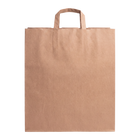
- Kraft paper takeout bags. Fold the top, run the seal over the fold, done in one motion at the pass.
- Food boxes and clamshells. Across the hinge, so the lid cannot lift without breaking the seal.
- Pouches and containers. Anywhere a lid or a flap needs to stay where you put it.
The large format is deliberate. A small round sticker seals a bag too, but it disappears. At 6 inches the seal is the first thing the customer sees when the order arrives, which makes it the last impression your kitchen gets to make on a delivery order.
A subscriber perk, not a freebie

The 100 seals are a subscription benefit, and we mean that literally. They are not a welcome gift and not a first-order bonus. Every subscription delivery brings 100 seals, worth $85, on top of the free bags and free shipping the subscription already gives you. The bags are what you pay for. The seals are what you get for staying.
Sealing is a habit, and a habit needs restocking. A one-off box of seals gets rationed for the big orders, then for the delivery orders only, then it is in a drawer. Seals that arrive with the bags every cycle do not.
And because the designs rotate, staying subscribed is how you get the next drop before it is gone.